
First-Time Home Buyer Guide Malaysia: Costs, Stamp Duty and Loans Explained
Buying your first home is likely to be the biggest purchase you make, and the price on the brochure is only part of what you pay. This guide covers the upfront costs, the government help available to first-time buyers in 2026, how a housing loan works and the steps from booking a unit to collecting your keys.
Read MoreWork Out What You Can Afford First
Before you start visiting show units, look closely at your monthly budget. Banks assess a housing loan against your income and your existing commitments, such as a car loan, PTPTN repayments and credit card balances, so it helps to know where you stand before you apply. A few things are worth doing early:
- Check your credit reports. CCRIS, from Bank Negara Malaysia, and CTOS show how you have repaid past borrowing. Settle any late payments before you apply.
- Ask about a loan pre-qualification. Many developers can arrange one with their panel banks, so you know roughly how much you can borrow before you commit to a unit.
- Leave room in the budget. A comfortable instalment still leaves money for bills, savings and the running costs of a home.
The Upfront Costs Beyond the Price
These are the main costs to plan for on top of the purchase price:
- Down payment. Banks can finance up to 90% of the price for your first and second housing loans, so expect to pay at least 10% yourself. The cap drops to 70% from a third outstanding housing loan.
- Stamp duty on the Memorandum of Transfer (MOT). This is charged on a tiered scale: 1% on the first RM100,000, 2% on the portion up to RM500,000, 3% up to RM1 million and 4% above that.
- Stamp duty on the loan agreement. A flat 0.5% of the loan amount.
- Legal fees. Lawyers' fees for the sale and purchase agreement (SPA) and the loan agreement follow a regulated scale under the Solicitors' Remuneration Order 2023. Some developers cover the SPA legal fees as part of a launch package, so it is worth asking.
- Other costs. Mortgage insurance (MRTA or MLTA) if you take it up, and once you move in, quit rent, assessment rates, utility deposits and, for strata properties, monthly maintenance fees and a sinking fund contribution.

The Stamp Duty Exemption for First-Time Buyers
Budget 2026 extended the full stamp duty exemption on both the MOT and the loan agreement for Malaysians buying their first home priced at RM500,000 or below. The exemption now runs until 31 December 2027.
To see what that is worth, take a RM450,000 home bought with a 90% loan. The MOT stamp duty would normally be RM8,000 and the loan agreement duty RM2,025, so an eligible first-time buyer saves a little over RM10,000. Conditions apply, so your lawyer will confirm whether you qualify when the SPA is prepared.
Other Help With Financing
If you are self-employed or a gig worker without a fixed monthly salary, the government's Housing Credit Guarantee Scheme (SJKP) guarantees housing loans for borrowers who find it hard to prove income. Its allocation was doubled to RM20 billion in Budget 2026. Civil servants can apply for financing through LPPSA, whose loan limit has been raised to RM1 million. You can also use savings in your EPF Account 2 (Akaun Sejahtera) towards buying a house, subject to EPF's conditions, so check the current rules on the KWSP website.
New Launch or Subsale?
Buying a new home from a developer usually means paying in stages as construction progresses, and the purchase is protected by the Housing Development Act. The developer must hand over the home within the time set in the SPA and repair defects during the defect liability period. A subsale home lets you move in sooner and see exactly what you are getting, but you pay the full price upfront and an older property may need renovation. Neither is better in itself. It depends on when you need to move and how much work you are willing to take on.
From Booking to Keys: The Main Steps
- Book the unit. You pay a booking fee to reserve it.
- Apply for the loan. Submit your documents to the bank, or to more than one bank to compare offers.
- Sign the SPA and loan agreement. Your lawyer explains the terms and handles the stamping.
- Pay as the home is built. For a new launch, the bank releases payments to the developer at each construction stage.
- Collect your keys. Inspect the home carefully at vacant possession and report any defects in writing.
If you are still deciding what kind of home suits you, our guide to landed house vs condo compares the two. When you are ready to look at homes, browse our residential developments or talk to our sales team about a loan pre-qualification.
This article is general information, not legal or financial advice. Figures are correct as of November 2026.

Buying Your First Home?
Talk to our sales advisers about our residential developments. We can help arrange a loan pre-qualification with our panel banks and walk you through the SPA.

OurJournals

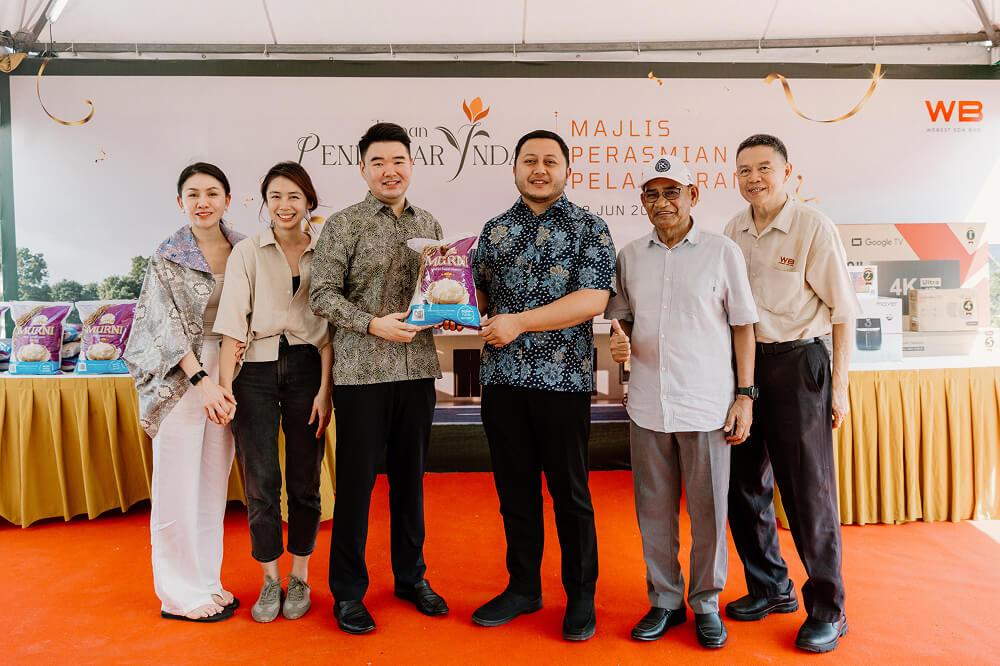
Official Launching of Taman Pendamar Indah




From Builder to developer
From builder roots to boutique developer, WEBEST sharpens its identity through design, delivery and purposeful developmentFrom builder roots to boutique developer, WEBEST sharpens its identity through design, delivery and purposeful development.


Signing of Moxy Hotel by Marriott International
Marriott International To Launch Moxy Hotel In Melaka By 2027.
